
Currency Conversion Fees on Casino Deposits
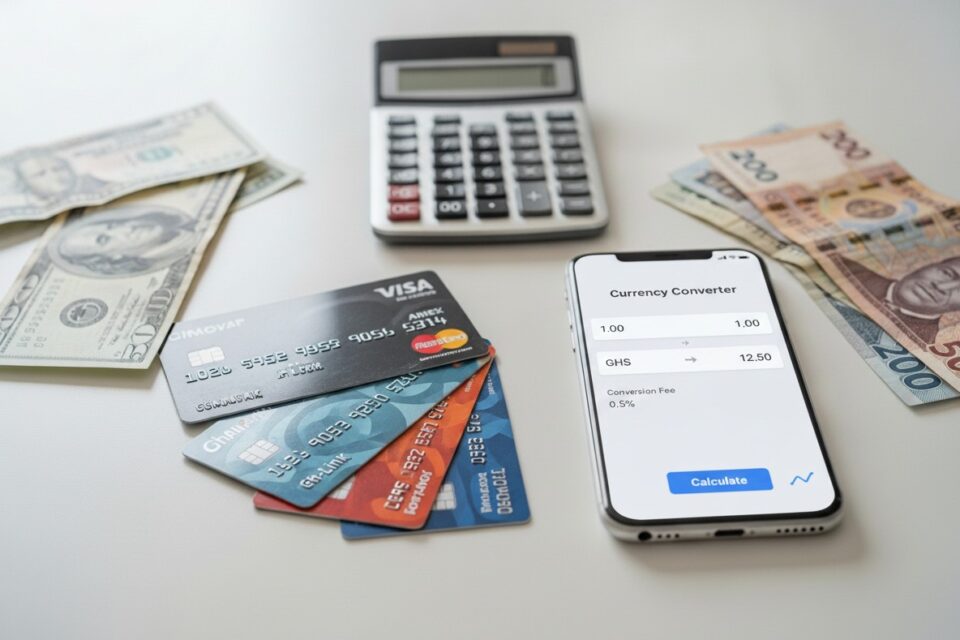
For Ghana-based players and members of the Ghanaian diaspora using USD to fund their online casino accounts, the same $100 deposit can result in dramatically different Ghana Cedi balances depending on exchange rates, markups, and hidden conversion fees. While one player might receive GHS 1,200 credited to their casino account, another using a different payment method could see only GHS 1,140 from the identical USD amount.
This comprehensive guide provides data-driven insights into USD to GHS casino deposits, comparing mid-market rates from sources like the Bank of Ghana against what casinos, banks, and payment processors actually offer. You’ll discover practical tactics to identify the cheapest payment rails, verify foreign exchange origins, and benchmark costs against official rates to maximize your gambling budget.
How USD to Cedi Conversion Works on Ghana Casino Deposits
When Ghanaian players fund their casino accounts using USD, the process involves multiple stages where currency conversion occurs. The typical player flow starts with USD funding from a bank account, card, or e-wallet, followed by automatic GHS conversion through the payment provider’s system, and finally crediting the converted amount in Ghana Cedis to the casino balance. Understanding this chain is crucial because each step can introduce fees and unfavorable exchange rates.
The difference between mid-market and retail foreign exchange rates significantly impacts how much players actually receive. Mid-market rates represent the true market value between USD and GHS, typically matching Bank of Ghana reference rates. However, retail rates offered by banks and payment processors include spreads that can range from 2% to 6% above mid-market rates. For example, if the mid-market USD to GHS rate is 12.00, a bank might offer 11.52, effectively reducing a $100 deposit value by GHS 48.
Key terms that affect casino deposits include FX spread (the difference between mid-market and offered rates), foreign transaction fees (flat or percentage charges for international payments), and dynamic currency conversion (casino-controlled rate selection). Importantly, casinos themselves rarely control exchange rates directly, with conversion typically handled by payment processors, banks, or specialized foreign exchange providers before funds reach the casino’s system.
Mid-Market USD to GHS vs Bank and Casino Rates
Different rate sources create varying costs for identical USD deposits, with spreads directly reducing the Ghana Cedis credited to player accounts. Bank of Ghana rates serve as the baseline, while commercial banks and payment processors add margins that can significantly impact gambling budgets.
Traditional Ghanaian banks typically offer the widest spreads, while fintech services like Wise and Remitly provide rates much closer to mid-market levels. Understanding these differences helps players choose the most cost-effective deposit methods for their casino funding needs.
| Source | Type of Rate | Typical Spread vs Mid-Market | When Players Encounter It |
|---|---|---|---|
| Bank of Ghana | Reference Rate | 0% (Baseline) | Rate comparison benchmark |
| Wise/Remitly | Near Mid-Market | 0.5% – 1.2% | Direct fintech transfers |
| International Cards | Visa/Mastercard Rate | 2.5% – 4.0% | Direct card deposits |
| Traditional Banks | Commercial Rate | 4.0% – 6.5% | Wire transfers, some cards |
| Dynamic Currency Conversion | Casino-Selected Rate | 5.0% – 8.0% | When DCC is selected at checkout |
Who Actually Converts Your USD to GHS on Casino Deposits
Multiple entities can handle currency conversion during casino deposits, and identifying the converter helps players understand where fees originate and how to optimize their deposit strategy. The conversion entity directly affects the exchange rate applied and additional fees charged.
Knowing who controls the foreign exchange process enables better budgeting and fee management, as different handlers have varying cost structures and rate policies that significantly impact the final GHS amount credited to casino accounts.
- Your issuing bank (for card deposits) – applies their international transaction rates and foreign exchange spreads, typically ranging from 3% to 6% above mid-market rates
- Payment processor networks like Visa, Mastercard, or local processors – handle conversion at their wholesale rates plus markup, usually 2.5% to 4% spread
- E-wallet providers such as PayPal, Skrill, or Neteller – convert using their internal rates, often 3% to 5% above mid-market with additional fees
- Local payment gateways serving Ghana casinos – apply conversion at checkout using negotiated rates, typically 2% to 4% spread depending on volume
- Dynamic Currency Conversion systems controlled by casinos – offer immediate rate display but usually include 5% to 8% markup above fair rates
- Fintech transfer services like Wise or Remitly – provide transparent conversion at near mid-market rates plus clear, upfront fees
Types of Currency Conversion Fees on USD to GHS Casino Deposits
Currency conversion fees on USD to GHS casino deposits come in multiple forms, often stacking together to create total costs significantly higher than advertised rates. Understanding each fee type helps players identify the true cost of their deposits and select the most economical funding methods.
These fees range from transparent percentage charges to hidden markups embedded in exchange rates. Some appear as flat fees regardless of deposit size, while others scale with transaction amounts, making larger deposits proportionally more expensive in certain cases.
The key to minimizing conversion costs lies in recognizing how different fee types combine and learning to avoid unnecessary charges through strategic payment method selection. Fee stacking can easily add 5% to 8% to deposit costs when players aren’t aware of the multiple charges being applied.
- Foreign Exchange Spread – The markup between mid-market USD to GHS rates and the rate offered by your payment provider, typically 1% to 6% and often the largest hidden cost
- Explicit Currency Conversion Fees – Direct percentage or flat fees charged for converting USD to GHS, usually 1% to 3% of the transaction amount plus potential flat minimums
- Foreign Transaction Fees – Charges applied by banks for international payments, commonly 2.5% to 3% of the deposit amount even before conversion costs
- Cash Advance Fees – Applied when credit cards process casino deposits as cash advances rather than purchases, typically 3% to 5% plus immediate interest charges
- Dynamic Currency Conversion Charges – Additional markup when choosing to see final amounts in USD at checkout, usually 3% to 6% above standard conversion
- Payment Processor Fees – Network charges from Visa, Mastercard, or alternative processors, generally 1% to 2.5% for international transactions
- Casino or Platform Surcharges – Some operators add deposit fees for certain payment methods, ranging from 2% to 5% or flat fees of $5 to $15
Hidden FX Markups vs Visible Deposit Fees
Hidden foreign exchange markups often represent the largest cost component in USD to GHS casino deposits, yet they’re rarely disclosed clearly to players. These markups are embedded in the exchange rate itself, making them difficult to spot without comparing against mid-market benchmarks like Bank of Ghana rates.
For example, if the true USD to GHS rate is 12.00 but your payment method applies 11.52, you’re paying a 4% hidden markup on every deposit. On a $250 deposit, this hidden fee costs you GHS 120 – often more than all visible fees combined. Players can identify these markups by dividing their final GHS amount by their USD deposit and comparing the result to current mid-market rates.
Visible deposit fees, while more transparent, can still be substantial and may stack with hidden markups. A typical casino deposit might show a 2.5% processing fee while also applying a 3.5% hidden exchange rate markup, creating a total cost of 6% that players don’t fully recognize. Always calculate the effective exchange rate received and compare it to Bank of Ghana reference rates to understand true conversion costs.
How Different Payment Methods Handle USD to GHS Conversion
Payment methods vary dramatically in their approach to USD to GHS conversion, with significant differences in who sets exchange rates, total costs, processing speeds, and player protection options. Understanding these variations helps Ghanaian players select the most appropriate funding method based on their priorities and deposit amounts.
The choice between payment methods can impact total deposit costs by 3% to 6%, making method selection crucial for frequent players or large deposits. Speed considerations also matter, as some methods offering better rates require longer processing times that might affect gambling plans.
Each payment category handles foreign exchange differently, with some providing upfront clarity on all costs while others embed charges in less transparent ways. Player protection through chargeback rights and dispute mechanisms also varies significantly between methods.
| Payment Method | Who Sets FX Rate | Typical Total FX Cost | Deposit Speed | Chargeback/Dispute Options |
|---|---|---|---|---|
| Credit Cards (Visa/MC) | Issuing Bank + Network | 4.5% – 8.0% | Instant | Strong – 120 to 540 days |
| Debit Cards | Issuing Bank | 3.5% – 6.5% | Instant | Limited – 60 to 120 days |
| Local Bank Transfer | Ghanaian Bank | 5.0% – 7.5% | 2-4 Hours | Bank Dispute Process |
| Wise Transfer | Wise | 1.0% – 2.0% | 1-3 Hours | Platform Protection |
| Remitly/Instarem | Service Provider | 1.5% – 3.0% | 30 Min – 2 Hours | Service Guarantee |
| E-Wallets (PayPal/Skrill) | E-Wallet Provider | 3.5% – 6.0% | Instant | Platform Dispute System |
| Mobile Money (MTN/Vodafone) | Telco + Partner | 4.0% – 7.0% | 5-15 Minutes | Telco Support Process |
| Cryptocurrency Exchange | Player Controlled | 0.5% – 2.5% | 15-60 Minutes | Very Limited |
Card Deposits: Credit vs Debit for USD to Cedi
Credit and debit cards handle USD to GHS conversion differently, with credit cards typically incurring higher total costs but offering better fraud protection and dispute rights. The type of card transaction processing can significantly impact both fees and player protections.
Credit cards often face cash advance treatment for gambling deposits, triggering immediate interest charges and higher fees, while debit cards usually process as standard international transactions. However, credit cards provide stronger chargeback rights that can be valuable for dispute resolution.
- Credit cards may trigger cash advance fees (3-5%) plus foreign transaction fees (2.5-3%), creating total costs of 5.5% to 8% before exchange rate spreads
- Debit cards typically avoid cash advance classification but still incur foreign transaction fees and potentially higher FX spreads set by issuing banks
- Dynamic Currency Conversion (DCC) affects both card types equally, adding 3% to 6% when players choose to see amounts in USD at checkout
- Credit cards offer chargeback protection for 120 to 540 days, while debit cards usually limit disputes to 60 to 120 days maximum
- Some Ghanaian banks block international gambling transactions on debit cards but allow credit card usage, affecting method availability
- Premium cards (gold, platinum) sometimes offer better exchange rates or reduced foreign transaction fees as cardholder benefits
- Both card types benefit from avoiding DCC selection and using bank-set exchange rates instead of casino-offered conversion at checkout
Using Fintech Transfer Services to Fund GHS Casino Balances
Fintech transfer services like Wise, Instarem, and Remitly provide transparent USD to GHS conversion with rates much closer to mid-market levels than traditional banks or direct card deposits. These services excel in cost efficiency and rate transparency, though they require additional steps compared to direct casino funding.
The process typically involves transferring USD to the fintech service, converting to GHS at their competitive rates, then sending the converted amount to a local Ghanaian bank account for subsequent casino deposit. While this adds time and complexity, the cost savings often justify the extra steps for larger deposits or frequent players.
Wise offers real mid-market exchange rates with transparent fees, typically costing 1% to 2% total for USD to GHS conversion and transfer to Ghanaian banks. Remitly and Instarem provide similar transparency with competitive rates, often beating traditional bank spreads by 3% to 5%. These services display exact exchange rates and fees upfront, allowing players to calculate precise GHS amounts before confirming transfers. The main limitation is that funds must be deposited to local bank accounts first, then transferred to casinos, adding 1 to 3 hours to the overall funding process compared to instant card deposits.
Strategies to Minimise Currency Conversion Fees on Ghana Casino Deposits
Minimizing currency conversion fees requires strategic planning around payment method selection, timing, and understanding of foreign exchange market dynamics. The most effective approaches combine rate benchmarking against Bank of Ghana standards with tactical deposit practices that avoid unnecessary fee layers.
Successful fee minimization often involves trading convenience for cost savings, as the most economical methods typically require additional steps or longer processing times. However, for regular players or those making substantial deposits, these strategies can save hundreds of Ghana Cedis monthly.
The key is developing a systematic approach that balances cost optimization with practical gaming needs, ensuring that fee reduction efforts don’t negatively impact the overall gambling experience through delayed funding or complicated processes.
- Use GHS-native payment methods when available – Mobile money services and local bank transfers eliminate USD conversion entirely, though they may limit international casino options
- Benchmark all rates against Bank of Ghana mid-market rates – Always calculate the effective exchange rate received and compare to official rates before confirming deposits
- Batch larger deposits to minimize percentage-based fees – Making fewer, larger deposits reduces the impact of flat fees and may qualify for better exchange rates
- Avoid Dynamic Currency Conversion at all costs – Always select “local currency” or “merchant currency” at checkout rather than seeing amounts in USD
- Consider fintech services for substantial deposits – Use Wise or Remitly for amounts over $200 where 3% to 5% savings justify the additional transfer steps
- Time deposits around favorable exchange rate movements – Monitor USD to GHS trends and fund accounts when rates are most favorable to your position
- Use premium cards or accounts with reduced FX fees – Some bank accounts and credit cards offer reduced foreign transaction fees as membership benefits
Checklist Before Confirming Any USD to GHS Casino Deposit
A systematic pre-deposit checklist helps ensure you’re getting the best possible exchange rate and avoiding unnecessary fees on every casino funding transaction. This process takes less than two minutes but can save significant amounts on larger deposits.
The checklist should become routine for all international deposits, as exchange rates and fee structures change frequently. Regular verification helps identify when your preferred payment method becomes less competitive and when switching might be beneficial.
- Check current Bank of Ghana USD to GHS mid-market rate as your benchmark for comparison against offered rates
- Confirm Dynamic Currency Conversion is set to “local currency” or “merchant currency” rather than USD display
- Verify total fees including foreign transaction charges, conversion fees, and any casino-specific deposit charges
- Calculate the effective exchange rate by dividing final GHS amount by USD deposit and compare to mid-market rate
- Review your bank or card statement from previous deposits to identify any unexpected charges that might apply
- Consider if the deposit amount justifies using a lower-fee but slower method like fintech transfer services
- Ensure your chosen payment method won’t trigger cash advance fees if using a credit card for the casino deposit